
By Chris Kobz, Founder, HappyDog
California public employees know buying a home here is harder than it was for your parents. You’re right. But waiting won’t make it easier, and you may be closer than you think.
Here’s what the numbers say, what waiting really costs a California renter, and what to do about it this year.
Is it harder to buy a home in California than it used to be?
Yes. Let’s not pretend otherwise.
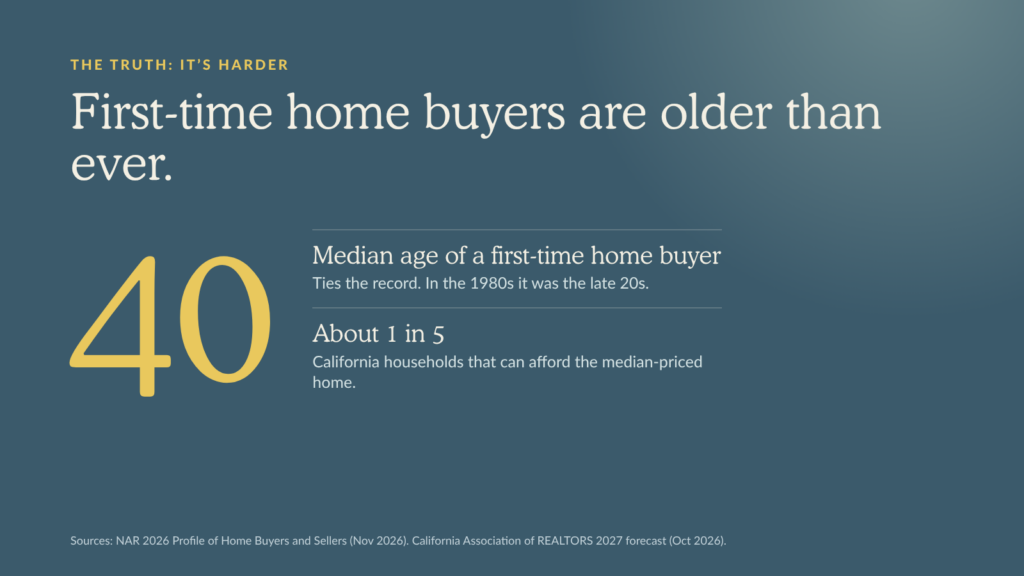
- Only about 1 in 5 California households can afford the median-priced home, according to the California Association of REALTORS.
- The typical first-time buyer is now 40, tying the record. In the 1980s it was the late 20s.
- First-time buyers are only about 1 in 5 sales nationwide.
Why does waiting cost California renters so much?
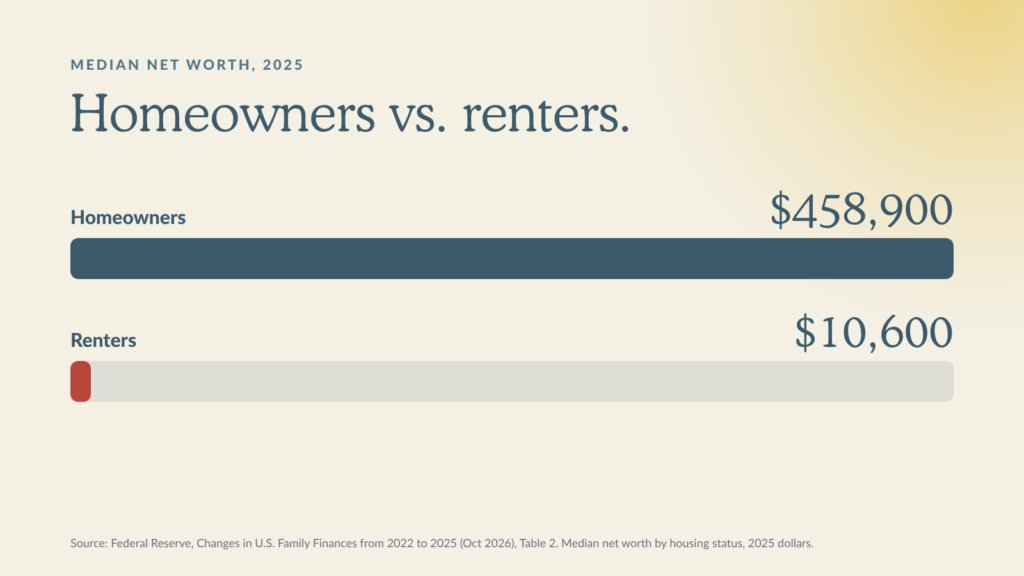
Because the gap between owners and renters keeps growing. The Federal Reserve’s latest survey of family finances puts the typical homeowner’s net worth at 458,900 and the typical renter’s at 10,600**. Since 2022, owners went up and renters went down.
NAR figures that putting off owning by ten years could cost about $150,000 in equity. Complaining about prices is fair. It just doesn’t build anything.
Is renting really cheaper than owning a home?
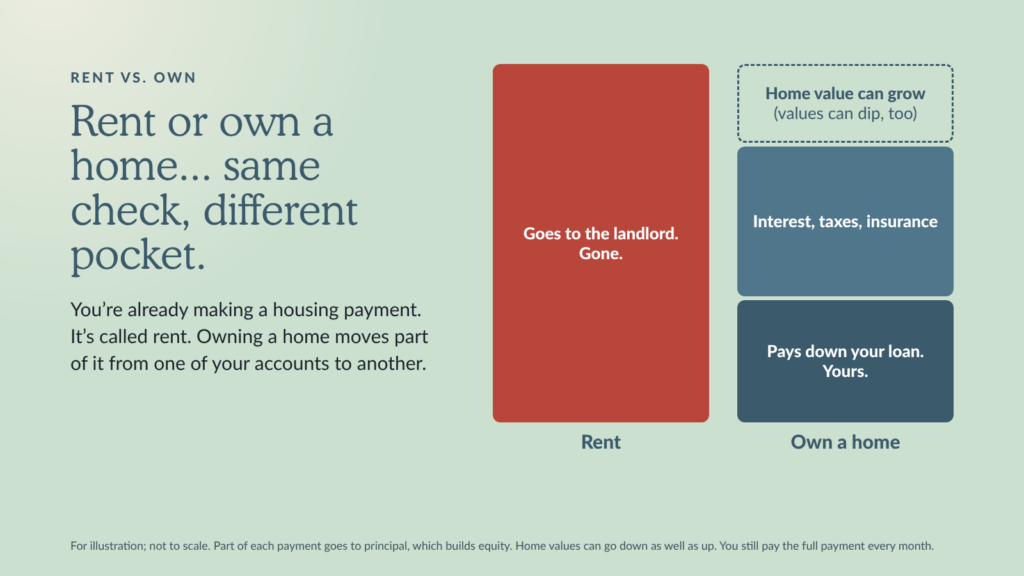
Month to month, rent can look cheaper. But it’s the same check in a different pocket. Rent is gone. When you own, part of every payment pays down your loan and stays yours, and the home can gain value over time. U.S. home values have gone up about 4.4% a year on average since 1991, including 2008. Values can dip, too.
We compare the two with what we call your True Monthly Cost: the payment, minus the part that pays down your loan, minus any tax savings. You still pay the full payment every month… True Monthly Cost is for comparing to rent, not for budgeting.
Try your own numbers below:
Calculator
Put in your rent. See where it goes.
Rent has gone up about 3.3% a year on average since 1990 (U.S. Bureau of Labor Statistics, rent of primary residence). Your rent may rise faster or slower. For illustration only.
Calculator
What could waiting cost you?
U.S. home values have gone up about 4.4% a year on average since 1991, including 2008 (FHFA House Price Index). Values can dip, too, and your area may be different. This isn’t a forecast or a loan offer. Want to see a payment? Try the mortgage calculator.
Why California public employees may be closer than they think
Lenders like steady. Teachers, nurses, firefighters, deputies, techs, office staff… a public employee paycheck tends to be the kind of steady, documented income a lender wants to see. That doesn’t make it easy. It does mean the starting line might be closer than you think.
How can a California public employee get ready to buy?
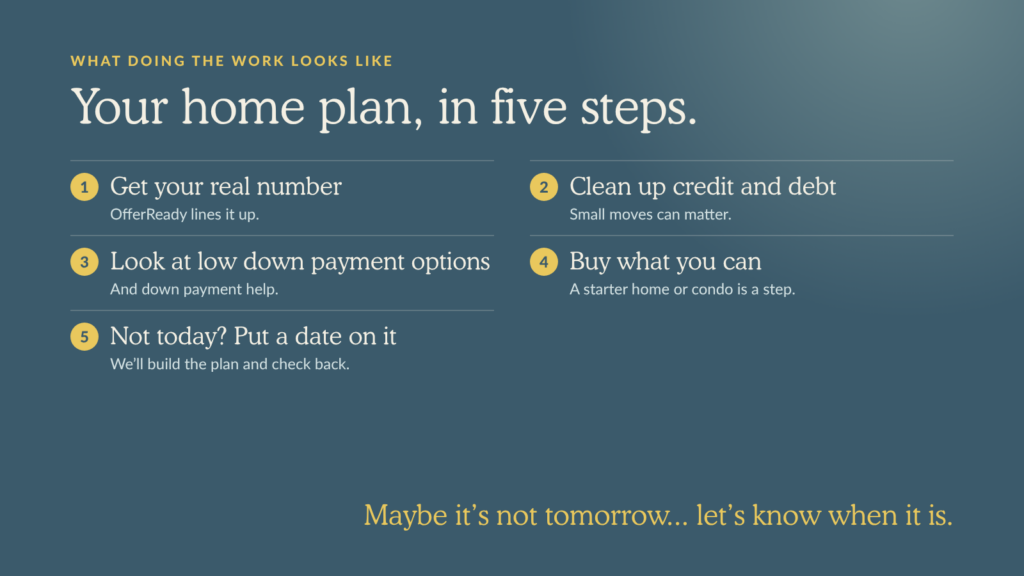
- Get your real number. OfferReady lines up your numbers so your offer is ready when you find the house.
- Clean up credit and debt. Paying down a card or fixing an error on your report can matter.
- Look at low down payment options and down payment help. Most first-time buyers put down a lot less than people think.
- Buy what you can. A condo or starter home is a step, not a settle.
- If it’s not today, put a date on it. We’ll build the plan and check back in.
Let’s make a plan
Press the Get Started button below. Bring your realtor, or we’ll introduce you to a good one. We’ll tell you straight where you are. Maybe it’s not tomorrow… but let’s know when it is.
Rent vs. own questions from California public employees
Should I wait for prices to drop before I buy?
Nobody knows when or if they will. C.A.R. expects California prices to rise a little next year. And while you wait, you’re still paying rent. Plan for the home you can buy, not the market you’re hoping for.
Is CELP a government program?
No. CELP is how HappyDog prices home loans for California public employees. It isn’t a government program, a grant or a government-backed loan.
Do I need a big down payment?
Often not. There are low down payment options and down payment help programs. We’ll show you what fits.
What if I’m not ready yet?
Then we’ll make a plan with a date on it. What to pay down, what to save, and when to check back.
We don’t discount. We start lower.
californiaemployeeloans.com A program of HappyDog
General information, not legal, tax or investment advice. The calculators are for illustration only. They are not a loan offer, a forecast, or a promise about future home values or rents. Home values can go down as well as up. Tax benefits depend on your situation; talk to a tax professional. True Monthly Cost is for comparing owning to renting, not for budgeting; you still pay the full payment every month. Not all borrowers will qualify. This is not a commitment to lend.
California Employee Loan Program (CELP) is not a government program, a grant, or a government-backed loan. CELP is a mortgage pricing model operated by HappyDog, a registered DBA of Go Rascal Inc., a licensed mortgage broker. Loans are arranged through third-party lenders. NMLS ID 2072896 (nmlsconsumeraccess.org). All loans are subject to underwriting approval, terms and conditions may apply, and programs are subject to change without notice. We are an Equal Housing Opportunity mortgage broker. We do not discriminate based on race, color, religion, national origin, sex, familial status, or disability. This is intended for consumers in Arizona, California, Colorado, Florida, Illinois, Oregon, and Texas only. Go Rascal Inc. does not conduct business as HappyDog in any states not listed. THIS PRODUCT OR SERVICE HAS NOT BEEN APPROVED OR ENDORSED BY ANY GOVERNMENTAL AGENCY, AND THIS OFFER IS NOT BEING MADE BY AN AGENCY OF THE GOVERNMENT.
Sources
- Federal Reserve: Changes in U.S. Family Finances from 2022 to 2025 (Oct 2026), Table 2
- NAR: Median first-time buyer age is still 40 (Nov 6, 2026)
- NAR: First-time home buyer share inches up to 22% (Nov 2026)
- California Association of REALTORS: 2027 California Housing Market Forecast (Oct 7, 2026)
- FHFA House Price Index
- U.S. Bureau of Labor Statistics: CPI, rent of primary residence (via FRED)